TL;DR:
You can cut a pleated air filter down to 12.5x24x1, and it will slide into the slot. What you cut away is the cardboard frame that holds the pleats open and blocks air from slipping around the edge. Modeling docketed with the California Energy Commission scored filters with a 10 mm gap and found a MERV 15 and a MERV 11 both landing at an effective MERV 8. What you save on one filter buys dirtier air.
Here is the thing I could not find stated plainly anywhere else. Two facts get reported separately: filter ratings come from testing the media alone, and real filter slots have gaps. Put them together and the number on the box stops describing your house. Trimming works mechanically and fails functionally. The frame on the edge you remove is doing two jobs. It holds pleat spacing against the pressure of moving air, and it closes the perimeter so return air must travel through the media. Cut it off and you lose both.
Key Takeaways
Air takes the easiest path, so a gap beside a filter passes part of your return air unfiltered.
A 10 mm gap cost a MERV 15 filter seven rating points and a MERV 11 three, leaving both at an effective MERV 8.
Filters with bypass gaps degrade as they load, because rising resistance pushes more air into the gap.
The filter measures 12.5 by 24.0 inches across the face and 0.75 inches deep, so trimming math built on the nominal "1 inch" starts wrong.
EPA tells homeowners to fit a filter snugly so air does not leak around it. A hand-cut edge does the opposite.
Can You Cut A Pleated Air Filter?
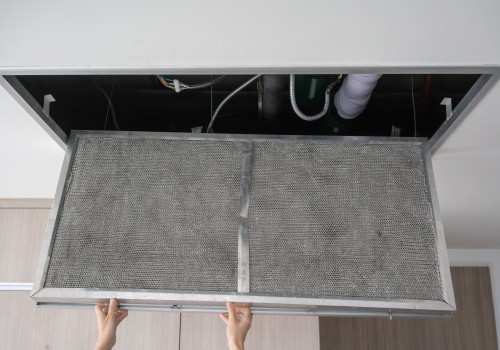
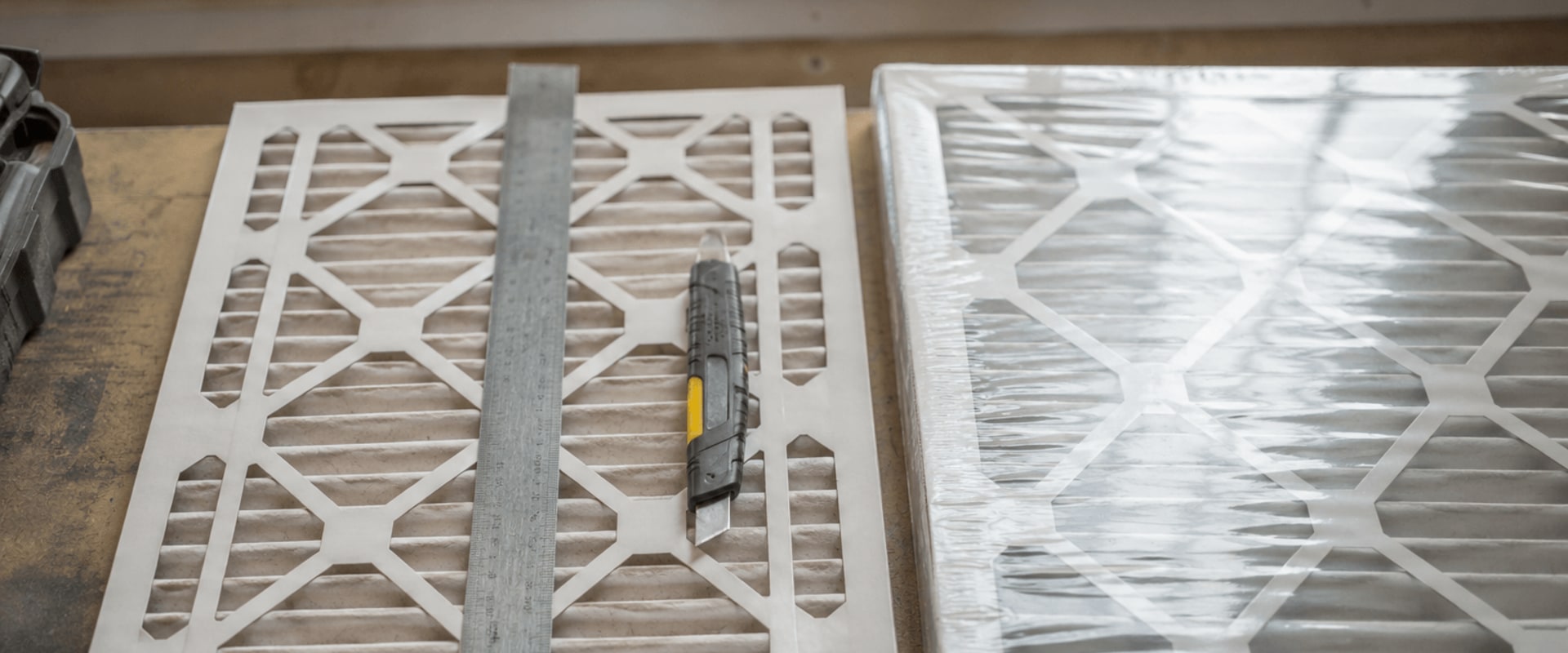
Yes. A pleated air filter is media glued into a chipboard frame, and a blade goes through both. Functionally, the answer changes. The frame is a structural part, not packaging. It sets pleat spacing so the media stays open under airflow, and gives the slot a flat, rigid edge to seat against. Cutting one side leaves exposed media with nothing holding its shape. If the construction is new to you, the filtration basics for the home are worth a look, as is a primer on choosing the right pleated filter.
The failure takes weeks to surface. A clean filter has low resistance, so a trimmed one looks fine on day one. As dust loads the media, resistance climbs and the unsupported pleats draw toward the blower, cutting the surface area doing work. Most people notice weaker airflow about halfway through the filter's life.
What Trimming To 12.5x24x1 Actually Costs
I wanted a number rather than a rule of thumb. Matthew Ward and Jeffrey Siegel modeled bypass around nine common HVAC filters in a paper docketed with the California Energy Commission, then calculated an effective rating for each. With a 10 mm gap, a MERV 15 lost seven rating points and a MERV 11 lost three. Both landed at an effective MERV 8.
A 1 mm gap sent under 5 percent of airflow around the filter. A 10 mm gap sent 25 to 35 percent, reaching 38 percent on loaded filters. Filters with sizeable gaps also get worse as they age, reversing what most people assume.
A hand-cut edge does not produce a 1 mm gap. Knives leave a wavy, compressible edge with no frame to hold it straight. Three to six millimetres of irregular gap along a 24-inch edge is realistic, assuming careful work.

The economics land badly. Filters this size run roughly $21 to $40 each depending on quantity. Trimming a filter you own saves the price of one filter and buys a season of partly filtered air, plus faster coil fouling.
The higher the MERV rating, the worse the trade. Efficient media has higher pressure drop, pushing more air toward any gap. Trimming a MERV 13 means paying its price and its resistance for something closer to MERV 8. Before settling on a rating, spend a few minutes comparing filter performance and picking a better filter for your system.
What I Tell People Who Ask
"The trimmed filters I pull out never fail the way people expect. The media is usually still clean. What has changed is the shape, because the cut edge has nothing holding it, and the pleats have leaned into each other where the frame used to be."
Two points hold regardless of who says them. A trimmed filter rarely looks broken, which is why it goes unnoticed for a season. The damage is geometric, not chemical, so changing it more often fixes nothing.
Why 12.5x24x1 Is The Size People Try To Cut
Odd sizes tempt people toward scissors because the hardware store stocks a wall of 16x25x1 and nothing else. Check what the label means first.
A 12.5x24x1 filter measures 12.5 by 24.0 inches across the face and 0.75 inches deep. The face dimensions match the label. The depth does not, and Filterbuy is one of the few sellers that prints the measured figure alongside the nominal one. The nominal-to-actual gap is industry standard, and it is where trimming math goes wrong. A homeowner measures a slot, subtracts from a nominal number printed on a different filter, and cuts to a dimension that was never real. Instead, measure the interior dimensions of the filter inlet before ordering anything.
Rule out the near neighbours first. A 12.5x24x1 slot is easy to confuse with 12x24x1, 12.25x24.25x1, and 12.5x24.5x1. Four different parts. Measuring the old filter compounds the error, because it may have been the wrong one all along. Measure the opening across two points per side, and record depth separately.
Most 1-inch filters are undersized on the face by roughly half an inch so they slide into the track, and tracks are built oversized for the same reason. You start with a gap by design. Trimming stacks a second, rougher one on top. Depth is the lever most people overlook, so read a guide to thicker filters and the case for why homeowners step up filtration before committing to a size.
How To Tell If You Already Have Bypass
No instruments needed. Pull the filter, inspect the slot rather than the filter, and look for three things:
Dust streaks on the metal downstream of the filter. Filtered air does not leave those.
A filter that slides out with no friction at all, meaning nothing was sealing against it.
A clean stripe along one edge of the filter face, where air went around instead of through.
Any one means you are losing filtration you paid for, knife or no knife. Sealing the slot only helps if you are also replacing filters on time.
What To Do Instead
1. Order the size. The straightforward fix is buying a filter already built to the dimension your system takes. Filterbuy is a US air filter manufacturer producing MERV-rated pleated HVAC filters in more than 600 standard and custom sizes, and it publishes this one's measured dimensions as 12.5 x 24.0 x 0.75 inches rather than only the nominal label.
Manufacturers producing filters built to the 12.5x24x1 size bind the media to a rigid frame on all four edges, the part a utility knife cannot replicate. Stocking a few removes the temptation, and there are options that trap more household allergens or simply keep dust out of your system at a lower rating. Ordering ahead is easier than it was, with several routes to order replacements without the hassle.
2. Close the gap you have. Adhesive foam weatherstrip on the filter track, not the filter, is the legitimate DIY move. EPA advises making the filter fit snugly so air does not leak around it, and warns against bending a filter to make it fit.
3. Use a retainer, not a blade. If your only filter is oversized in one dimension, a retention frame sized to the opening holds it square without modification.
4. Move up in depth if the cabinet allows. A deeper filter carries more media area, so it loads slower at lower resistance. Cabinets that take one give you deeper media for longer service and the headroom to capture finer particles without choking airflow. Read up on how filter thickness affects filtration and airflow and confirm clearance, since a filter that will not seat is its own bypass problem. The EPA Indoor airPLUS program requirements set MERV 8 as the floor for central forced-air systems in qualifying homes.
Essential Resources on "12.5x24x1 Air Filter"
What to read after sizing.
Confirm Your Filter Actually Seals Before You Blame The Filter
Federal guidance on verifying filter size and inspecting housing so air moves through the media.
Best for: a leaky or oversized slot.
cdc.gov/niosh/ventilation/prevention/air-cleanliness.html
Stop Guessing How Many Filters To Keep On Hand
Why a loaded filter raises resistance, plus a three-month replacement floor.
Best for: deciding how many to order.
energystar.gov/saveathome/heating-cooling
Choose A MERV Rating With Medical Backing, Not Marketing
Allergist guidance recommending disposable MERV 11 to 13, and warning that fiberglass filters test poorly.
Best for: allergy households.
acaai.org/allergies/management-treatment/living-with-allergies/air-filters
Understand The Ceiling On What A 1-Inch Filter Can Do
Most systems ship with a filter near MERV 8. This covers what upgrading buys.
Best for: expectations for a thin filter.
lung.org/clean-air/indoor-air/protecting-from-air-pollution/air-cleaning
Fix The Allergen Sources No Filter Can Reach
Filtration supplements source control rather than replacing it. Dust mites, dander, humidity, mold.
Best for: when a filter upgrade has not helped.
aafa.org/allergies/prevent-allergies/control-indoor-allergens
Know When Smoke Season Justifies A Filter Upgrade
Running higher-efficiency filtration and setting the fan to On during smoke events.
Best for: smoke season.
epa.gov/indoor-air-quality-iaq/create-clean-room-protect-indoor-air-quality-during-wildfire
Work Out Whether A Better Filter Alone Will Do The Job
How filtration and air changes per hour combine, so you can judge what needs ventilation instead.
Best for: weighing a portable cleaner too.
Supporting Statistics
1. Heating and cooling account for 52% of household energy use.
Source: EIA, 2020 Residential Energy Consumption Survey
Your filter sits in the home's largest energy system, so a gap costs you hourly
eia.gov/energyexplained/use-of-energy/homes.php
2. Filter pressure drop averaged 71 Pa in occupied homes, rising to 149 Pa with MERV 16.
Source: Berkeley Lab field measurements, DOE research repository
Higher efficiency means higher resistance, and resistance forces air into a gap
osti.gov/servlets/purl/1171748
3. Roughly 53% of a person's PM2.5 exposure is outdoor particulate breathed indoors.
Source: National Academies workshop, National Library of Medicine
The fix is MERV 13 or higher, which only delivers if the filter seals
ncbi.nlm.nih.gov/books/NBK583504
Glossary
Filter bypass: Air reaching the supply side without passing through the filter media, usually through gaps between the filter and its housing.
MERV: Minimum Efficiency Reporting Value, rating how well a filter captures particles across defined size ranges. Higher numbers mean finer capture.
Effective MERV: What a filter delivers once edge bypass is counted. A MERV 15 label can behave like MERV 8 in a leaky slot.
Nominal size: The rounded dimension printed on the label. Actual dimensions are usually smaller, which is why a "12.5x24x1" filter measures 12.5 x 24.0 x 0.75 inches.
Filter track: The channel holding a filter in place, built slightly oversized so filters slide in and out. That introduces a gap before any trimming.
Frequently Asked Questions
Is it safe to cut down a furnace filter in an emergency?
A trimmed filter beats none, which lets dust reach the blower and coil directly. Treat it as a stopgap measured in days. Allergy households should read up on how filtration helps allergy sufferers before settling for a compromise.
Does cutting a filter void its rating?
In practical terms, yes. Standard test methods measure the media, not the installed filter system, and assume no bypass. Introduce a gap and the label stops describing what your system receives. Check your equipment's maintenance terms too, since many require filters installed to manufacturer specification.
I already cut one and it has been in for months. What now?
Check the slot for the three signs above, then the blower compartment and coil for dust that got past. Replace with the correct size. No panic needed, but do not run another season on it.
Can I tape the cut edge to rebuild the frame?
Tape adds some rigidity but restores neither the sealing surface nor the pleat spacing, and it releases as humidity cycles through the return. If cost is what pushed you toward the knife, there are value-priced pleated options and ways to get cleaner air on a budget without modifying anything.
What if my slot measures 12.5 by 24 exactly?
Then a filter sold as 12.5x24x1 is correct, since the face dimensions match the label. Check depth separately. Filterbuy builds this size 0.75 inches deep, so a slot cut for a true 1-inch filter leaves a quarter inch of slack for the retaining clip.

Final Word
The cost of trimming is not the filter. It is the efficiency you paid for and no longer receive, every hour the system runs. Measure the slot, order the size that matches, and spend ten minutes sealing the track instead of reshaping the filter. If price is what tempted you, buying filters in bulk and hunting bulk savings on replacements beats a utility knife every time.
Learn more about HVAC Care from one of our HVAC solutions branches…
Filterbuy HVAC Solutions - Miami FL - Air Conditioning Service
1300 S Miami Ave Apt 4806 Miami FL 33130
(305) 306-5027
https://maps.app.goo.gl/Ci1vrL596LhvXKU79